





Blog
How to Choose the Right Ride-On Car for a Child

Choosing a children’s electric car is easier when you look beyond colour and styling. The right model should suit the child’s age and ability, the number of riders, the available play space and the level of adult control required.
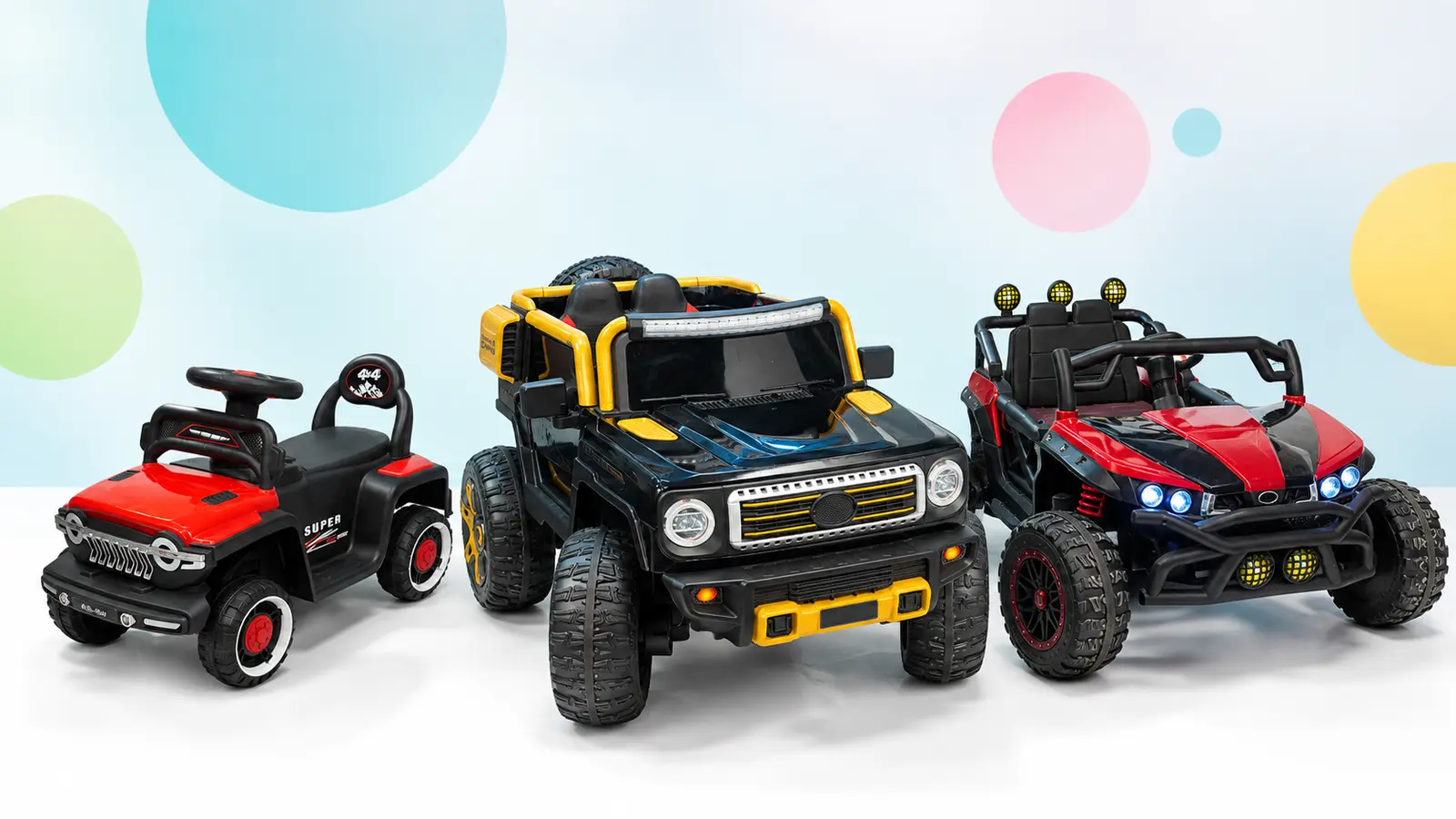
This kids’ ride-on car guide explains the main points to compare before ordering. It also introduces three electric ride-on options available from Totoland Toys. Product specifications and availability may change, so always check the individual product page and confirm important details before purchase.
Start with the Child’s Age, Size and Ability
Age recommendations are useful starting points, but children of the same age can differ in height, confidence and coordination. Check the manufacturer’s age guidance, maximum supported weight, seat dimensions and available legroom for the specific model.
A younger or first-time rider may benefit from simple controls, a slower start and close adult supervision. A more experienced child may be comfortable with a larger model, but should still learn how to start, stop and steer in a clear play area.
Do not select a ride-on car only because it looks large or powerful. A model that is difficult for the child to enter, steer or stop may reduce both comfort and enjoyment.
Choose Between One Seat and Two Seats
Some electric ride-on cars are designed for one child, while larger buggies may include two seats. A two-seater can be useful for siblings or shared play, but the listed weight capacity must still be followed. Two seats do not automatically mean that any two children can ride together.
Before buying, confirm:
- The number of functional seats.
- The total recommended weight capacity.
- Whether each seating position has an appropriate restraint.
- The internal seat and leg-space dimensions.
- Whether the car will fit through your gate, doorway or storage area.
The 12V Kids’ Electric Buggy – 2 Seater is the option to review when shared seating is a priority. Confirm the current capacity, dimensions and included accessories on its product page before ordering.
Check the Driving and Parental Controls
Many children’s electric cars allow the child to steer and operate a pedal or switch. Selected models also include a parental remote control, which can help an adult guide the car while the child is learning. Remote-control functions differ between models, so confirm whether the supplied controller can steer, stop or change the operating speed.
A remote is an assistance feature, not a replacement for supervision. Keep the child within sight, maintain a safe distance from obstacles and remain ready to intervene. Batteries should also be installed correctly in the remote, and its operation should be tested before the first ride.
The Kids’ Electric Ride-On Jeep with Remote and LED Lights is worth comparing when parental remote control is an important requirement.
Do Not Judge Performance by Voltage Alone
Battery voltage is one part of a ride-on car’s specification, but it does not describe the complete driving experience. Motor configuration, vehicle weight, wheel design, surface conditions, rider weight and battery condition can all affect operation.
Check the product listing for the supplied battery and charger, expected charging instructions and any stated operating information. Use only the charger supplied or approved for that model. An incompatible charger, incorrect voltage, overcharging or poor storage can damage the battery or electrical system.
Charge the car in a dry, ventilated area under adult supervision. Disconnect it as instructed and keep chargers, cables and batteries away from children when they are not in use.
Match the Wheels to the Play Surface
Consider where the car will normally be used. A smooth, level compound is different from grass, gravel or an uneven path. Wheel size, ground clearance and the overall design can influence how easily the car moves across a surface.
Before each ride, inspect the area for slopes, steps, drains, traffic, water, loose stones and other hazards. Ride-on cars should not be used near roads, swimming pools or steep ground. Wet conditions should also be avoided unless the manufacturer explicitly states otherwise.
Compare Comfort and Entertainment Features
Children often enjoy realistic details such as headlights, dashboard controls, horn sounds and music. These features can add interest, but comfort, control and suitability should remain the main priorities.
The Kids’ Electric Ride-On Car with LED Lights, Music and USB is designed for shoppers who want built-in entertainment features. Confirm the current connections, included accessories and controls on the product page because features can vary by production batch.
When comparing models, also look for:
- A comfortable seating position.
- Easy entry and exit.
- A suitable restraint or safety belt where provided.
- Controls the child can understand and reach.
- A start and stop action appropriate for a beginner.
- Clear assembly, charging and care instructions.
Plan for Assembly, Storage and Transport
Electric ride-on cars are bulky products and may require some assembly. Confirm whether the steering wheel, seat, wheels, mirrors or battery connections need to be fitted after delivery. An adult should complete the assembly and check that every fastener and electrical connection is secure before use.
Measure the intended storage space before ordering. The car should be kept in a dry location away from rain, excessive heat and direct water exposure. If it will be transported frequently, check whether it fits in the available vehicle space without forcing or damaging its bodywork.
Safety Checks Before Every Ride
A short inspection before play can identify loose or damaged parts early. Adults should check the wheels, steering, seat, restraint, battery compartment and visible wiring. Test the controls in an open area before allowing the child to ride.
Children should wear closed shoes and suitable protective equipment for the environment. Long clothing, cords and loose objects should be kept away from moving wheels. Follow the manufacturer’s guidance and supervise the child throughout use.
Quick Ride-On Car Buying Checklist
- Confirm the manufacturer’s age and weight guidance.
- Measure the seat, legroom, storage area and access route.
- Decide whether one or two seats are required.
- Check whether a parental remote control is included.
- Compare the battery, charger and charging instructions.
- Choose wheels and clearance suited to the intended surface.
- Review the restraint, start action and child controls.
- Confirm included entertainment and connectivity features.
- Ask about assembly, stock and delivery arrangements.
Ordering a Kids’ Ride-On Car from Totoland Toys
Totoland Toys offers children’s electric cars and buggies for different play needs. Browse the Ride-On Cars collection to compare available models, or visit the Totoland Toys shop for more toys and children’s products.
Because ride-on cars are large products, delivery cost and transport arrangements can depend on the model and destination. Contact Totoland Toys before ordering if you need confirmation of dimensions, current stock, included accessories, assembly or delivery within Nairobi and other parts of Kenya.
Frequently Asked Questions
What age is suitable for an electric ride-on car?
Suitability depends on the individual model and the child’s size and ability. Check the manufacturer’s age guidance, weight capacity, seat dimensions and control layout before purchase.
Is a parental remote control necessary?
It can be helpful for younger or first-time riders, but it does not replace close adult supervision. Confirm exactly which functions the controller operates on the selected model.
Can two children use a two-seater buggy?
Only when the product is designed for two riders and their combined weight remains within the stated capacity. Confirm the available seating space and restraint arrangement.
Can a ride-on car be used on grass?
This depends on the model, wheels, ground clearance and condition of the surface. Review the manufacturer’s guidance and avoid steep, wet, rough or unsafe areas.
How should an electric ride-on car be charged?
Use the supplied or manufacturer-approved charger and follow the model’s charging instructions. Charging should be supervised by an adult in a dry, ventilated location.