

Blog
How to Choose Building Blocks for Kids by Age and Skill

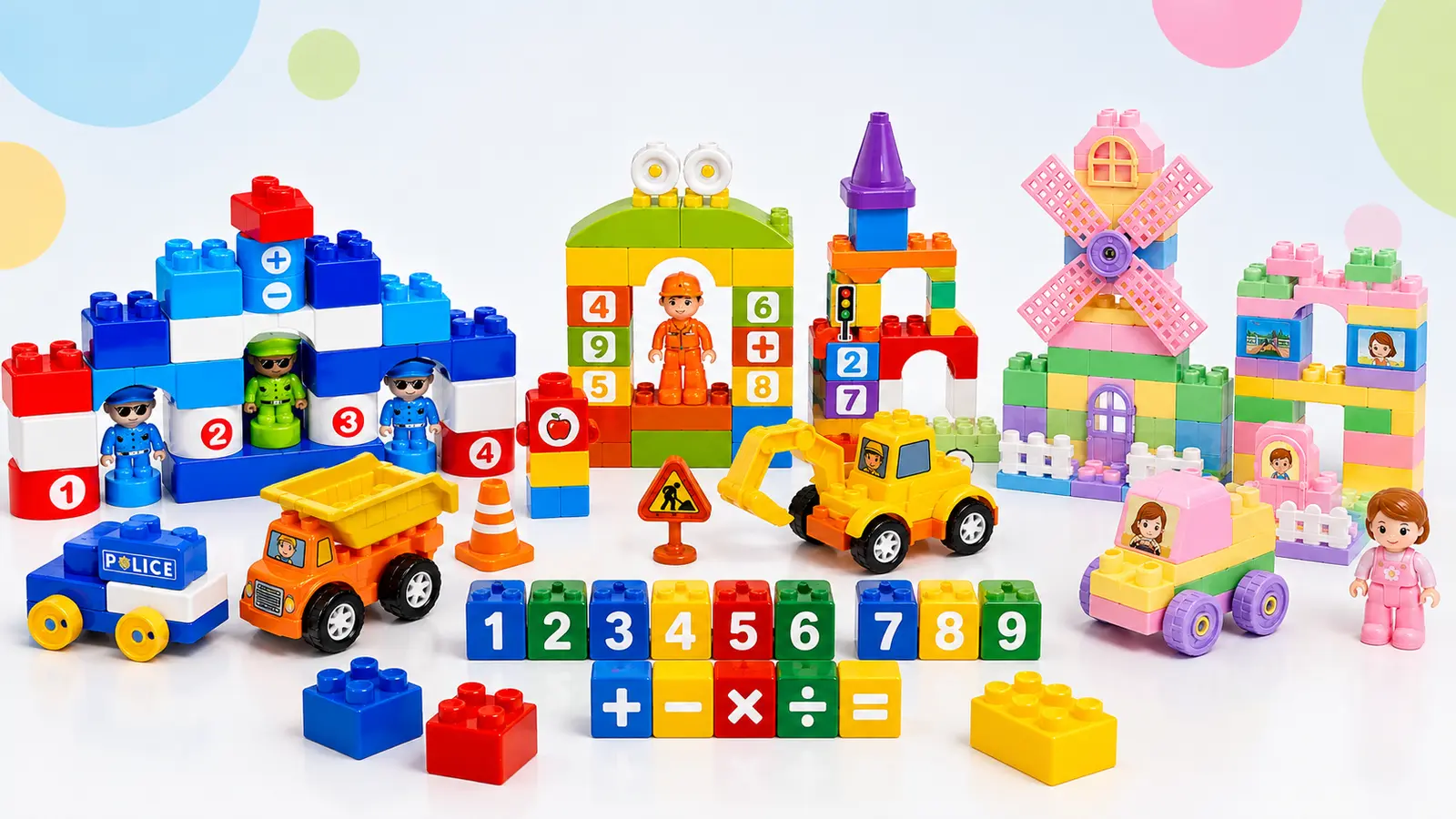
Choosing building blocks for kids starts with more than counting the number of pieces. The most suitable set should match the child’s age, hand coordination, experience, interests and preferred type of play. Piece size, connection style and build complexity can determine whether a set feels enjoyable or frustrating.
This guide explains how to compare block sets for different stages of play. You can also browse the current Building Blocks collection at Totoland Toys for options available in Kenya.
Why Children Enjoy Building Blocks
Building blocks provide an open-ended play experience. Children can follow an example, copy a familiar object or invent a completely new structure. A single set may be used to make towers, roads, houses, vehicles, patterns, numbers or imaginary scenes.
Depending on the set and the child’s stage, block play may involve:
- Grasping, placing and connecting pieces.
- Matching colours and shapes.
- Sorting pieces into groups.
- Counting and recognising number symbols.
- Planning a structure and adjusting it when it falls.
- Taking turns and sharing pieces.
- Creating stories around buildings, vehicles or figures.
The value comes from how well the set suits the child and how freely it can be used. A larger or more complicated box is not automatically the better choice.
How to Choose Building Blocks for Kids by Age
Age labels provide an important starting point, particularly because small pieces may be unsuitable for younger children. Always check the manufacturer’s recommendation on the product page, packaging and instructions before use.
Building blocks for toddlers and younger children
Younger children often manage larger, easy-to-grip pieces better than small or tightly fitting components. A set with clear colours and a simple connection system can make stacking and joining more accessible.
The 100-Piece Educational Building Blocks Set with Number Cubes includes large assorted blocks and number or maths-symbol cubes. Before ordering any set for a young child, confirm the stated age, individual piece dimensions and supervision guidance.
Building sets for preschool and early-school play
As coordination and attention develop, children may enjoy sets that combine construction with vehicles, figures, numbers or themed pretend play. The 50-Piece City-Themed Building Blocks with Truck adds a city theme, toy trucks and figures, while the 38-Piece Police-Themed Building Blocks provides another story-led option.
The child should still be able to connect and separate pieces without excessive force. If the set includes stickers or small accessories, an adult should help according to the supplied instructions.
More advanced builders
Older or more experienced children may enjoy smaller pieces, more detailed models, magnetic connections or sets requiring several stages. The current Magnetic Building Blocks are one alternative for children who enjoy experimenting with geometric forms and different connection angles.
Magnetic toys require special care. Confirm the manufacturer’s exact age guidance and inspect every piece regularly. A damaged piece or exposed magnet should be removed from use immediately.
Compare the Size and Number of Pieces
Piece count affects how many structures can be created, but the number on the box should not be considered alone. A set may count figures, wheels, stickers or accessories as separate pieces. Look at the actual contents and the size of the principal building components.
Consider:
- Whether the pieces are large enough for the intended child.
- How many core blocks are included.
- Whether wheels, figures or special shapes are part of the total.
- How much floor or table space the completed build may require.
- Whether the pieces can be stored together after play.
A 38- or 50-piece themed set may offer a focused building activity, while a 100-piece set may support more variations. The better option depends on the child’s ability and intended use.
Choose the Connection Style
Not all building blocks connect in the same way. Some stack loosely, some use studs, some link together and others use magnets. The connection type affects the force required, the shapes that can be built and how stable the finished model feels.
- Stacking blocks support simple towers and balancing.
- Interlocking blocks can create firmer structures.
- Link cubes join in repeated patterns and may support counting activities.
- Magnetic pieces connect at particular edges or faces and require intact enclosed magnets.
Totoland’s 100-Piece Educational Link Cubes Set is useful for shoppers looking specifically for connecting cubes rather than conventional brick-style blocks.
Open-Ended Blocks or Themed Sets?
Open-ended blocks can be rebuilt into many unrelated designs. They suit children who enjoy experimenting without a fixed final model. Themed sets add a context such as a city, police scene, character or vehicle, which may help a child begin a story or follow an example.
Choose according to the child’s play style:
- An imaginative builder may prefer assorted shapes and colours.
- A child interested in vehicles may enjoy a city or truck set.
- A child learning numbers may benefit from blocks printed with numbers or symbols.
- A child who likes completing a specific model may prefer illustrated building instructions.
Themed pieces can be useful, but they should not prevent the child from inventing alternative structures. Check whether the main blocks can be rearranged freely.
Look at Materials, Finish and Durability
Inspect the product description for the stated material and care instructions. Plastic pieces should have smooth edges and secure joins. Wooden blocks should be checked for splinters, damaged coatings or loose components. Magnetic pieces should remain fully sealed.
Before and after play, look for:
- Cracks, sharp edges or broken corners.
- Loose wheels, figures or decorative parts.
- Peeling stickers or coatings.
- Warped pieces that no longer connect correctly.
- Exposed magnets or internal components.
- Dirt trapped inside hollow pieces.
Remove any damaged component immediately. Follow the manufacturer’s cleaning guidance, because soaking, heat or strong chemicals can damage certain plastics, printed surfaces, wood or magnets.
Building-Block Safety Checklist
Safe use begins with the individual set’s age label and instructions. Young children should be supervised appropriately, and blocks should be kept away from babies when they contain small pieces.
- Confirm the recommended age before opening the set.
- Check the dimensions of the smallest pieces.
- Count or inspect special components after play.
- Keep broken pieces out of reach.
- Do not allow children to place blocks, wheels or magnets in their mouths.
- Use a clear floor or table away from stairs and walkways.
- Store the entire set securely after use.
For additional general guidance, parents can review the U.S. Consumer Product Safety Commission’s toy-safety information. The product’s own instructions remain the primary reference for age, assembly, care and supervision.
Storage and Keeping Sets Organised
A container, drawstring bag or compartment box can make it easier to keep pieces together. Store blocks somewhere dry and easy to inspect. When several sets are compatible, families may combine them for play, but keeping the original packaging or instructions can help identify parts and age guidance later.
Encourage the child to sort pieces by colour, size or shape during clean-up. This can turn storage into part of the play routine while reducing the chance of small pieces being left on the floor.
What to Confirm Before Ordering
- Manufacturer’s recommended age.
- Total piece count and smallest-piece size.
- Block material and connection method.
- Included figures, wheels, stickers or accessories.
- Whether illustrated instructions are supplied.
- Finished model size and required play space.
- Cleaning and storage requirements.
- Current colour, design and stock.
- Delivery arrangements for your location.
Photographs of similar sets can contain pieces that are not included in every version. Review the live product listing and confirm any essential item before payment.
Buying Building Blocks for Kids in Kenya
Browse building blocks for kids at Totoland Toys, including educational blocks, themed sets, link cubes and magnetic construction options. You can also compare related Educational Toys and the wider Learning & Creative Play collection.
Totoland Toys serves customers from Nairobi and can arrange delivery to suitable destinations across Kenya. Confirm current stock, product details, delivery cost and timing before ordering when a particular set or urgent delivery is required.
Frequently Asked Questions
What building blocks are suitable for a young child?
Look for a set whose manufacturer recommends it for the child’s age, with pieces that are appropriately sized and easy to handle. Check the smallest components rather than relying only on the overall block size.
Is a set with more pieces always better?
No. More pieces can offer additional building options, but connection style, piece size, complexity and the child’s interests are equally important. A smaller themed set may be more engaging for some children.
What is the difference between link cubes and building blocks?
Link cubes use a repeated joining system and can be useful for patterns or counting. Building blocks is a wider category that includes stacking, interlocking, themed and magnetic construction pieces.
Are magnetic building blocks safe?
Use only a set suitable for the child’s stated age and inspect it regularly. Stop using any piece that is cracked or exposes a magnet, and follow all manufacturer supervision and storage instructions.
Does Totoland deliver building blocks across Kenya?
Delivery can be arranged within Nairobi and to suitable destinations across Kenya. Cost and timing depend on the location and order, so confirm the arrangements before dispatch.
Find a Suitable Building Set
Start with the child’s age and ability, then compare piece size, connection type, theme and complexity. Explore Totoland’s current Building Blocks collection and check each product page for exact contents and guidance before ordering.